
Our History

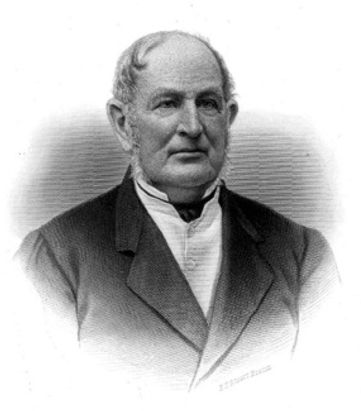
William Sutton
FROM CENTENARY HISTORY OF WILLIAM SUTTON LODGE, OCTOBER 1967
This seems to be a suitable place to insert a brief biography of R. W. William Sutton, for whom the Lodge was named, and whose generosity on many occasions provided gifts and lodge properties, many of which are in use to this day.
William Sutton was born in Salem, Mass., on July 26, 1800, scion of a family whose roots and traditions extended to Lexington and Bunker Hill. His life was spent in many areas of activity and public trust. His business life was that of the tannery and the shipping trade, which he inherited from his father. He conducted both businesses from his majority until the age of 78. He was a Director of the South Danvers Bank, Salem Commercial Bank and Commercial and Holyoke Insurance Companies. He was also President of the First National Bank of Salem for 45 years.
His public service included Treasurer of the Essex Agricultural Society, Head of the Salem Fire Department, President of the Charitable Mechanics Association and Overseer of the Poor. He also served five terms in the Massachusetts House of Representatives, two terms as State Senator, two years in the Governor's Council, Trustee of the State Insane Hospital and Rainsford Hospital.
His military career progressed by merited promotions from the Danvers Cadet of his youth to the rank of Major General. Too old for active service during the Civil War, he was detailed for hospital work, and received honorable mention at the close of his efficient service.
His Masonic career began in 1822 when he became a member of Jordan Lodge in Peabody. He then joined Essex Lodge in Salem when he was 34. He held many Masonic Offices, among which was the station of Senior Grand Warden of the Most Worshipful Grand Lodge of Massachusetts. He was active in Scottish Rite Masonry, and received the honorarium of the 33° in 1862, and became an active member of the Supreme Council in 1875. The Lodge of Perfection at Salem, instituted in 1863 as the result of his efforts, bears his name, as does Sutton Royal Arch Chapter in Lynn.
William Sutton laid down his Working Tools and was raised to the Celestial Lodge Above on April 18, 1882.

Our New Lodge Room

Grand Master Richard J. Stewart presided over a dedication ceremony in November to consecrate the newly created and beautifully appointed lodge room of William Sutton Lodge in Saugus.
In the course of constructing the new lodge room, members became aware of an existing bust of Rt. Wor. William Sutton (33rd degree conferred in 1862 and Sr. Grand Warden 1866) presented to Grand Lodge in 1875. Sadly, it had been damaged (large hole in rear of head) and become quite tarnished with age. It had been relegated to the basement storage area at Grand Lodge. William Sutton Lodge trustees felt that this would be a most fitting object to add as a capstone to the decor of their new lodge room.
After considerable negotiations with the board of directors of Grand Lodge and with the assistance of the Grand Secretary, Rt. Wor. Jeffrey Gardiner, the bust was repaired at the expense of the lodge and is now on permanent loan from Grand Lodge to William Sutton Lodge. This bust of the lodge’s benefactor will be an attractive addition for the future proceedings of the lodge in a room that the Grand Master has aptly called “one of the most beautiful lodge rooms in the state.”
—Rt. Wor. Amos F. Cutter, Jr.

Traveling to Lynn but wanting to meet in Saugus
William Sutton Lodge owes its origin to the efforts of a group of Masons who desired to form a Lodge in Saugus and who in 1866 held several preliminary meetings for that purpose. The building in which these meetings took place still stands in the same location on the northwesterly side of Boston Street, between the East Saugus bridge and the railroad crossing. At that time Brother Charles I. Hitchings, who became our first Secretary, operated a stitching room on the second floor of that building, and it was in his quarters that the meetings were held.
The selection of a name for the proposed Lodge apparently occasioned little difficulty. Brother Harmon Hall, who was one of those active in the movement and was the first signer of the petition and by-laws, proposed the name of General William Sutton, of whom more will be said later in this narrative, and the suggestion being favorably received, Brother Hall was delegated to wait upon Brother Sutton and to obtain, if possible, permission to use his name. At a subsequent meeting, Brother Hall reported to the group as follows: He had called upon General Sutton and had made known to him the wishes of his Masonic friends in Saugus, to which the General had replied that if it was the sincere desire of his Saugus friends to adopt his name as that for the new Lodge, he would cheerfully give his consent. Brother Hall's report was at once accepted and the name adopted.
Favorable action on the petition to the Grand Lodge, which was prepared by Brother Franklin S. Phelps, resulted in the granting of a Dispensation to form and open a Lodge after the manner of Ancient, Free and Accepted Masons. This was signed by Most Worshipful Charles C. Dame, Grand Master, and Right Worshipful Charles W. Moore, Grand Secretary, and was dated October 25, 1866. The thirteen Master Masons who signed the petition and to whom the Dispensation was issued were described as having been recommended as Master Masons in good standing by the Worshipful Masters, Wardens and Brethren of Mount Carmel and Golden Fleece Lodges, and were as follows:
-
Harmon Hall
-
Enoch T. Kent
-
Everett H. Newhall
-
Edward S. Kent
-
George Burrill
-
John Roache
-
Sebastian S. Dunn
-
Edwin H. Foster
-
Alfred W. Libbey
-
Jacob B. Calley
-
George H. Sweetser
-
George C. Stewart
-
Charles I. Hitchings
-
The first regular meeting under the Dispensation was held "at the Secretary's rooms" on Thursday evening, January 3, 1867, with the following organization, all of whom were present excepting only the Junior Steward:
-
George H. Sweetser, Worshipful Master
-
Everett H. Newhall, Senior Warden
-
Harmon Hall, Junior Warden
-
Jacob B. Calley, Treasurer
-
Charles I. Hitchings, Secretary
-
Edwin H. Foster, Inside Sentinel
-
George C. Stewart, Senior Deacon
-
Alfred W. Libbey, Junior Deacon
-
Osgood Peabody, Senior Steward
-
Edward S. Kent, Junior Steward
-
Enoch T. Kent, Marshal
-
John W. Skinner, Tyler

The Lodge Continues
The first meeting under dispensation was held at 849 Boston Street, Lynn. The second story of this building was occupied as a stitching shop operated by Bro. Charles I. Hitchings, and it was in these rooms that William Sutton Lodge was organized.
After the first meeting, subsequent meetings were held in Sutton Hall, erected in 1866 at the corner of Hesper and Boston Streets, Lynn, until 1882, when the Lodge moved to the building called Sweetser's or Sisson's Hall in Franklin Square in East Saugus, where it was to remain for 81 years. It is interesting to note in passing that, although William Sutton Lodge was composed of Saugus Masons, the first two lodge halls were actually situated in Lynn for a period of 17 years.
The Lodge was constituted on October 1, 1867, by Most Worshipful Grand Master Charles C. Dame, and a large contingent of Grand Lodge Officers, among whom was R. W. William Sutton, who lent his name to our Lodge, and who, by his generosity and interest, helped the Lodge to grow and prosper.
The first application for the Degrees under the dispensation was received from Albert W. Mugridge, 25 years of age, who listed his occupation as grocer, who thus became our first candidate. On the same evening, Charles W. Newhall, Josiah Starr, Benjamin F. Calley, Edwin Roswell, Horace Brown, George Houghton and James H, Webber signified their desire to join the Lodge.

Grand Lodge meeting room
formerly known as Sutton Hall
William Sutton


Sculptures donated by William Sutton to Grand lodge


William Sutton Lodge has been active in the Masonic community since the 19th Century.
We have a wonderful history that we want to share.